Polis- City-state; this is when each city has their own culture and government and acts more like a country. They were important because Ancient Greece wasn't a unified country, they all had their own cultures and lifestyles.
Alexandria- Ancient Greek city, located on the Mediterranean and founded by Alexander the Great in 332 BC. It was designed in a Hellinistic model. This was an important city because it served as a trading post for Greece and a gateway for Greek culture into Egypt.
Herodotus- 5th Century historian who wrote about the expansion of the Achaemenid empire, descriptions of the peoples the Persians conquered, fairy tales, gossip and legends. He was one of the first historians to actually travel and see the places/events he wrote about, which earned him his name as the Father of History.
Hippocrates- The Father of Medicine; the first to release medicines from religious superstition and say it was science based. He is often said to be the founder of western medicine and is thought to have used clinical and homeopathetic ways.
Parthenon- Temple in Acropolis built to replace the previous one which had been destroyed by Persians in 480 BC. It cost 469 silver talents to build and was dedicated to the Goddess Athena to thank her for their defeat over Persia. This temple symbolized the Athenian dominance over all of Ancient Greece and that Athens was a Greek imperial master.
Tyrant- A ruler who seized power unconstitutionally or inherited such power. This was important in Ancient Greece, because most of the rulers where the sons of previous rulers and were handed the power that Ancient Greece held.
Pericles- Leader of Athens who was responsible for rebuilding the city after the Persian Wars. He was responsible for the building of the Acropolis, which showed the wealth and power of Athens. He was also the ruler during the Peloponnesian War and he died of the plague that struck the city during the 5th century.
Homer- Ancient Greek Epic Poet of the Odyssey and Iliad. These poems are important to Greek culture because they were written during the time of the Trojan War era. Homer was non-literate and had to memorize his poems and tell them by memory.
Citizen- Free men, adults, owners of ground, holders of the political rights.The Greeks didn't see women, children or outsiders as citizens, they were considered "aliens".
Ostracism- Juridical practice in which a potentially dangerous person would be exiled from the city without loss of property or civil rights. Many political figures were exiled from the city but popular vote from the people.
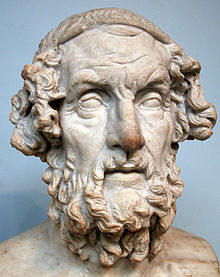
Bust of Homer housed at the British Museum
